You need to secure your business. But there are so many types of locks out there. Keypads, card readers, biometric scanners, smart locks. Which one actually works for your business? Let’s break down commercial door locks so you can pick the right one.
What Are the Main Types of Commercial Door Locks?
Here’s what’s available and what each costs:
Mechanical deadbolts offer medium security for $50 to $200. Best for small offices and storage rooms. Low maintenance, just minimal upkeep.
Panic bars provide medium to high security at $200 to $600. Perfect for emergency exits and high traffic areas. Need regular inspection.
Keypad locks give medium to high security for $150 to $500. Great for offices and restricted areas. Just change batteries occasionally.
Card readers deliver high security at $500 to $2,000. Used in corporate offices and multi-tenant buildings. Need software updates.
Biometric scanners offer very high security for $1,500 to $5,000. Best for high security areas and labs. Require regular calibration.
Smart locks provide high security at $300 to $1,500. Popular in modern offices and tech companies. Need app updates.
Magnetic locks give very high security for $800 to $3,000. Perfect for server rooms and data centers. Just check the power supply.
What Are Mechanical Lock Systems?
These are your traditional types of locks. Keys, deadbolts, panic bars. No batteries, no software, no computers. They work even during power outages.
Mechanical systems are reliable. A good deadbolt lasts 10 to 15 years with minimal problems. But they have a big issue: lost keys. When an employee leaves, you either trust they won’t come back or you rekey everything. That gets expensive fast.
What Are Electronic Lock Systems?
Electronic commercial door locks use codes, cards, fingerprints, or phones instead of keys. When someone leaves, you just delete their access. No rekeying needed.
They track who enters and when. This is huge for security. If something goes missing, you know exactly who was there. About 70% of businesses now use some form of electronic access control.
What Are Access Control Systems and How Do They Work?
Access control systems let you decide who gets in where and when. Your receptionist can enter the lobby but not the server room. Your IT guy can access everything, but only during work hours.
The system logs every entry. You can run reports showing who entered which doors at what times. This helps with security investigations and even helps track employee hours.
What Are the Different Types of Access Control Systems?
Let’s go through each type of Access Control System.
What Is Keypad Access Control?
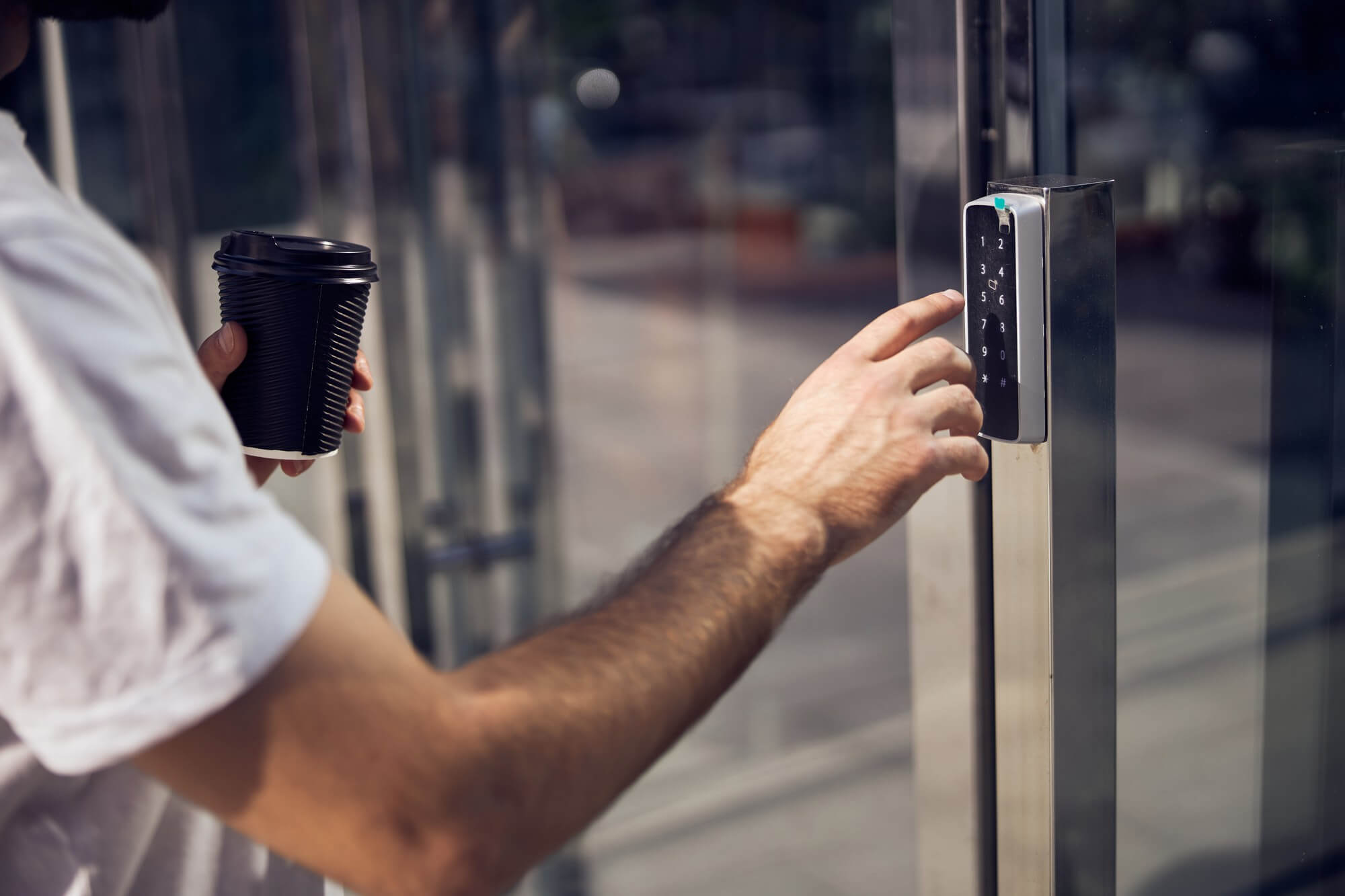
Users enter a code to open the door. Codes can be different for each person or shared. You can change codes anytime without buying new hardware.
The problem? People share codes or write them down. Security isn’t great if everyone knows the code.
What Is Card Reader Access Control?
Users swipe or tap a card to enter. Each card is programmed for specific doors and times. Lost cards get deactivated immediately.
Cards are cheap to replace, usually $2 to $5 each. About 60% of offices use card access because it balances security and convenience well.
What Is Biometric Access Control?
Users scan a fingerprint, face, or eye to enter. You can’t share or lose a fingerprint. This gives the highest security.
But biometric systems cost more and need regular calibration. Dirty or wet fingers sometimes don’t scan well.
What Is Mobile Access Control?
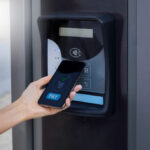
Users unlock doors with their phones using Bluetooth or apps. No cards to carry or codes to remember. Access gets granted or removed instantly through software.
This is the newest option and is growing fast. About 25% of new commercial installations now use mobile access.
How Do You Choose Between Lock Types for Your Business?
It depends on your needs. How many employees? How often do people come and go? What are you protecting?
Small office with 5 to 10 people? Keypad locks work fine. Medium business with 20 to 50 employees? Card readers make sense. High security facility? Go with biometric or mobile systems.
Budget matters too. Starting a business? Begin with mechanical locks and upgrade later. Established company? Invest in access control systems now.
What Are the Pros and Cons of Each Lock Type?
Mechanical locks are cheap and reliable, but you can’t track who enters. Lost keys mean rekeying everything.
Keypads are affordable and have no keys to lose. But codes get shared, and there’s no way to track individual users.
Card readers balance cost and security well. Easy to manage. But cards get lost and cost money to replace.
Biometric systems offer the best security and perfect tracking. But they cost a lot upfront and need maintenance.
Mobile access is convenient and modern. Easy to manage remotely. But it requires good cell service, and people can lose their phones.
Get the Right Locks Installed Today
Your current locks aren’t working. Maybe employees keep losing keys. Maybe you can’t track who’s coming and going. Or maybe you just need better security and don’t know where to start. You’re worried about picking the wrong commercial door locks and wasting thousands on a system that doesn’t fit your business.
Susu Locksmith specializes in types of locks for all business sizes. We assess your building, ask about your security needs, and recommend systems that actually make sense for your situation. We install everything from basic deadbolts to advanced biometric systems. And we service what we install, so you’re not stuck with broken locks nobody knows how to fix.