A locked storefront can still have security gaps. Weak lock cylinders, damaged door frames, faulty exit hardware, and poorly fitted security gates can create easy entry points for intruders. These vulnerabilities can leave Brooklyn businesses exposed after hours.
For Brooklyn small businesses, effective storefront security means making locks, gates, doors, and exit hardware work together. The right setup protects your property after hours without making daily access difficult for employees or customers. Knowing what each component does and where it belongs helps close security gaps before they become problems.
What Is Included in Storefront Security?
Storefront security covers the locks, doors, security gates, panic bars, and other hardware that protect a business entrance. Each piece handles a different part of the security equation:
- Locks: Control who can enter and help prevent unauthorized access.
- Security gates: Add another physical barrier when the business closes.
- Panic bars: Let people exit quickly through doors where panic hardware is required.
- Door hardware: Hinges, closers, strikes, and other components help the entrance close, latch, and operate properly.
- Door and frame: Strong hardware cannot do much if the door or frame is damaged or poorly aligned.
Security also has to work with NYC building and fire requirements. Storefront gates and exit doors have specific rules, so choosing the strongest-looking hardware is not enough. The goal is to secure the entrance without creating a problem for employees, customers, or emergency exits.
What Is Included in Brooklyn Small Business Storefront Security? Locks, Gates & Panic Bars
A storefront has two security priorities: keeping unauthorized people out and giving authorized users easy access. Busy Brooklyn entrances handle constant traffic from customers, employees, and deliveries, putting extra wear on locks, hinges, closers, and other hardware. Fortified storefront security balances protection with convenience. Employees should not struggle with a sticking lock, and customers should not encounter damaged or poorly maintained entrance.
Security Note:
A strong lock cannot compensate for a weak door, damaged frame, or poorly aligned strike. Treat storefront security as a complete system, not a single piece of hardware.
Storefront Locks: The First Line of Defense
Locks control the most basic security question: who can open the door? Storefronts can use several types of commercial locks depending on the door, business, and level of security required.
Mortise Locks
Mortise locks sit inside the door rather than attaching entirely to its surface. Their heavier construction makes them common on commercial storefront doors, especially where the entrance sees frequent use.
Cylindrical Locks
Cylindrical locks use a bored hole through the door and are generally simpler to install and replace. They can work well for many small businesses, although the exact lock grade and door construction still matter.
Deadbolts
Deadbolts add another locking point that can make forced entry more difficult. Commercial applications require careful selection because the deadbolt has to work with the door, frame, strike, and required exit hardware.
High-Security Locks
High-security cylinders use more controlled key systems and features designed to make unauthorized key duplication harder. They become particularly useful when several employees, managers, or contractors need access, and the owner wants better control over who has a working key.
What Should You Look for in a Storefront Lock?
- Grade and durability: Look for commercial-grade locks built for frequent use and repeated locking and unlocking. A storefront entrance that handles heavy daily traffic needs hardware that can withstand constant operation without becoming loose or unreliable.
- Key control: Consider who has access to your business and what happens when a key is lost or an employee leaves. Restricted key systems make unauthorized duplication more difficult and give businesses better control over who can enter.
- Deadbolt protection: A properly installed commercial deadbolt can add another layer of protection against forced entry. Check the bolt length, strike plate, and frame condition rather than judging security by the lock cylinder alone.
- Exit requirements: If the storefront door is also a required exit, security hardware must allow occupants to leave quickly during an emergency. Panic bars or other exit devices may be required depending on the building and occupancy.
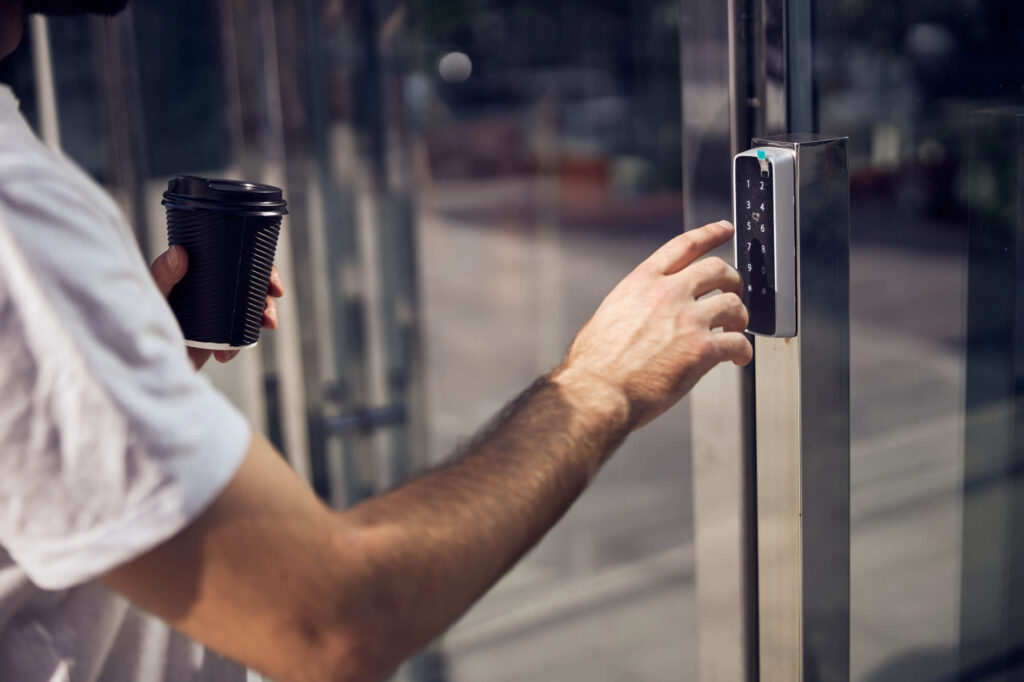
- Access control: Businesses that need to limit or track entry may benefit from electronic access control instead of relying entirely on traditional keys. Keypads, card readers, or other systems can make it easier to change access when employees or access needs change.
Security Gates for Brooklyn Storefronts
Security gates create a second physical barrier after the business closes. Roll-down grilles, folding gates, and other commercial security systems can protect glass storefronts and doors when employees are gone.
New York City has specific requirements for storefront security grilles. Importantly, the city changed the rules in June 2026 and repealed the former 70% visibility requirement for Group B and M occupancies. Existing businesses are no longer required to replace a grille simply to meet that former visibility standard. Other applicable egress and permitting requirements still apply.
Roll-Down Security Gates
Roll-down gates move vertically and can cover a storefront opening when the business closes. Their compact operation makes them practical where sidewalk space and interior floor space are limited.
Folding Security Gates
Folding gates move sideways and can work where a roll-down system is not practical. You can open the gate during business hours and secure it across the entrance after closing.
Open Security Grilles
Open grilles provide a physical barrier while allowing more visibility into the storefront. NYC guidance has long recognized the value of maintaining visibility through storefront security systems, although the former 70% requirement is no longer in effect.
Placement matters as much as the gate itself. NYC guidance recommends integrating security gates with the storefront rather than allowing them to interfere with the design or operation of the entrance.
Panic Bars: Security Without Blocking an Exit
Panic bars solve a different problem from locks and security gates. They are designed to let people leave quickly through certain required exit doors without having to search for a key or operate a complicated lock. The hardware is especially important in businesses where a door serves as part of the required means of egress. NYC building and fire codes contain specific requirements for panic and fire-exit hardware in certain occupancies and occupant-load situations.
How Panic Bars Work
Person pushes the horizontal bar, which releases the door latch from the inside. That simple motion makes the door easier to operate during an emergency when speed matters.
Panic Bar vs. Regular Door Lock
Regular locks control access into a space. Panic hardware controls exit from a space. The two can work together, but they serve different purposes. The exact hardware required depends on the occupancy, occupant load, door, and applicable code. Businesses should not install or modify exit hardware based only on what appears strongest.
When Does a Storefront Need Panic Hardware?
Not every storefront automatically needs a panic bar. Requirements depend on the building’s use and how the exit is classified. NYC fire and building requirements regulate means of egress and emergency exit hardware, with panic hardware required in specific occupancy and occupant-load situations. That distinction matters for small businesses. A retail shop, restaurant, office, or other commercial space may have different requirements based on its layout and occupancy.
Good to Know:
Never add a lock, gate, or other device that prevents a required exit from being opened as intended during an emergency. NYC Fire Code requires that the means of egress remain free from obstructions and impediments to immediate use.
How Locks, Gates, and Panic Bars Work Together
Each component handles a different part of storefront security. Strongest setup is not necessarily the one with the most hardware. It is the one where every component works properly with the others.
| Security Component | Main Purpose |
| Commercial lock | Controls access through the storefront door |
| High-security cylinder | Improves key control and resistance to unauthorized duplication |
| Security gate | Adds a physical barrier after closing |
| Panic bar | Provides fast exit through certain required doors |
| Door closer | Keeps the door closed after use |
| Reinforced strike | Strengthens the area where the lock engages the frame |
A locksmith should evaluate the complete entrance rather than replacing one component without checking the rest.
What Should Small Businesses Check After a Break-In?
- A break-in should trigger more than a lock replacement. The entire entrance needs to be inspected for damage.
- Start with the door and frame. Look for bent metal, damaged strikes, loose hardware, cracked glass, or signs that someone attacked the locking points.
- Next, review who still has access. Lost keys, employee turnover, or copied keys can leave the business vulnerable even after a new lock is installed.
- Finally, consider whether the existing security setup matched the risk. A damaged storefront may need stronger hardware, a security gate, improved key control, or a combination of upgrades.
How Much Does Storefront Security Cost?
Storefront security does not have one fixed price. Cost depends on the hardware, door type, number of openings, installation requirements, and whether the work involves repair or a complete upgrade.
| Security Work | Main Cost Factors |
| Lock replacement | Lock grade, cylinder, and door type |
| High-security lock | Cylinder system and key-control requirements |
| Security gate | Gate type, opening size, material, and installation |
| Panic bar installation | Hardware type, door condition, and code requirements |
| Door repair | Frame, hinges, strike, closer, and alignment damage |
| Complete storefront upgrade | Combination of locks, doors, gates, and hardware |
Getting the entrance inspected first helps identify what actually needs replacing. Replacing every component is not always necessary when one damaged part is causing the problem.
How to Choose Storefront Security for Your Brooklyn Business
Start with the way your business actually operates. A small retail shop with one entrance will have different needs from a restaurant with several doors and a high volume of customers.
Consider these questions before choosing hardware.
- How many people need keys or access codes?
- Does the storefront have glass doors or windows that need additional protection?
- Does the entrance serve as a required exit?
- Does the business operate late at night?
- Has the storefront experienced attempted break-ins?
- Does the existing door or frame show damage?
- Would a security gate improve after-hours protection?
- Who needs access, and how will lost or former employee keys be handled?
The answers give a locksmith a clearer picture of the security system the business actually needs.
Final Thoughts: Build Storefront Security Around Your Business
Storefront security is not about making a business look heavily fortified. The goal is to create an entrance that controls access, withstands daily use, protects the property after closing, and still allows people to exit safely when necessary. Locks, security gates, and panic bars each have a specific job. Choosing and installing them correctly requires attention to the door, frame, business use, and applicable NYC requirements.
SuSu Locksmith helps Brooklyn businesses handle storefront lock repairs, replacements, security upgrades, gates, and commercial door hardware. Whether the problem is a worn lock, damaged entrance, unreliable security gate, or outdated access system, the right solution starts with inspecting the existing setup and identifying what actually needs to change.
Protect the storefront you depend on every day. Contact SuSu Locksmith to discuss the security needs of your Brooklyn business and build a setup around the way your business operates.
Frequently Asked Questions
Are security gates required for Brooklyn businesses?
Not every Brooklyn storefront is required to have a security gate. Businesses that choose to install security grilles still need to comply with applicable NYC building, fire, and permitting requirements. The former 70% visibility requirement for Group B and M occupancies was repealed in June 2026.
Are panic bars required on every commercial storefront door?
No. Panic and fire-exit hardware requirements depend on factors such as occupancy type and occupant load. The applicable NYC Building and Fire Codes determine when the hardware is required.
Can I add a security gate to an existing storefront?
Yes, depending on the storefront and project requirements. Installation can involve building-code, fire-safety, and permitting considerations, so the opening and proposed gate should be evaluated before installation.
What is the difference between a security gate and a panic bar?
A security gate protects the storefront, primarily when the business is closed. A panic bar helps people exit quickly through certain doors when required. They serve different purposes and should not be treated as interchangeable security hardware.
Should I replace the whole storefront door if the lock is damaged?
Not always. A locksmith can inspect the lock, strike, hinges, frame, and door alignment to determine whether the problem is limited to the hardware or involves the entrance itself.
How often should storefront locks and gates be checked?
Check them whenever employees notice sticking, unusual movement, loose hardware, or trouble closing and latching. Regular maintenance is especially useful for storefronts that handle heavy daily traffic.